
Product Updates
How to Mutate Data in a System Designed for Immutable Data
In our Field Guide series, we share challenges and successes we've encountered while exploring uncharted territory.



In our Field Guide series, we share challenges and successes we've encountered while exploring uncharted territory.

Sentry’s growth led to increased write and read load on our databases, and, even after countless rounds of query and index optimizations, we felt that our databases were always a hair’s breadth from the next performance tipping point or query planner meltdown. Increased write load also led to increased storage requirements (if you’re doing more writes, you’re going to need more places to put them), and we were running what felt like an inordinate number of servers with a lot of disks for the data they were responsible for storing. Here’s a look at how we attempted to understand which database system was right for us and how we adapted our approach when we encountered some unexpected challenges.
In our Field Guide series, we share challenges and successes we've encountered while exploring uncharted territory.
In our Field Guide series, we share challenges and successes we've encountered while exploring uncharted territory.

Getting started with Java exception handling can be an intimidating prospect. Learn more here about how to capture Java exceptions with Sentry.
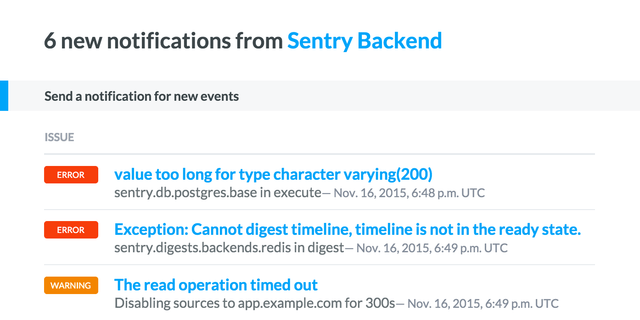
Several weeks ago we announced a preview release of notification digests, an error monitoring feature that we have been working on that focuses on reducing…
One of the more frequent pieces of feedback that we hear from users of Sentry is that they'd like to reduce the number of notifications that they receive…