Engineering
How Etsy gets its mobile apps ready for peak traffic
Etsy engineering manager Jay Henry on running a code slush instead of a freeze, keeping alert fatigue out of peak season, and pricing a crash in GMS.

Etsy engineering manager Jay Henry on running a code slush instead of a freeze, keeping alert fatigue out of peak season, and pricing a crash in GMS.

Picking a model for your agent is a tradeoff between cost, quality, and speed. Here's a free-tier model that made things up, what an eval would and wouldn't have caught, and why reading the agent traces is how you actually decide.
Errors, traces, logs, and metrics overlap more than you'd think. An opinionated, practical guide to which signal to reach for, and why the choice decides what you (and your coding agents) can debug later.

The bottleneck for self-healing software isn't agent intelligence. It's that agents have no idea what actually broke in production. Sentry MCP and the CLI bridge that gap.
Supabase gives you query insights and logs, but it can't trace across your full stack. Here's how to connect Next.js, Supabase Edge Functions, and Postgres with distributed tracing, log drains, and AI-assisted debugging in Sentry.
When an agent's tool call silently degrades the input to a completely different agent two steps later, standard monitoring won't catch it. Here's how to find bugs that live between agents.
A little while ago, when agents were telling me "You're absolutely right!", I was building webvitals.com. You put in a URL, it kicks off an API request to a…
A developer's guide to AI agent observability and tracing with OpenTelemetry gen_ai spans—dashboards, traces, and cost metrics to debug agents in Sentry.

Next.js hides errors across three runtimes. Here's how to close the gaps in hydration errors, server actions, ORM queries, and AI observability.
Half of all Sentry JS SDK installs are on v8 or older. If you're one of them, here's what you're missing, and how to close the gap without the pain.

Stop seeing random chunk names in your Next.js errors. Set up source maps in Sentry to get readable stack traces that point to your actual code.

Less code, faster builds, same telemetry. How Sentry’s Next.js SDK supports Turbopack without losing insight into errors or performance.

Stack traces show what broke. Logs show why. A real Next.js bot-protection bug where Sentry logs exposed the missing context and fixed prod.
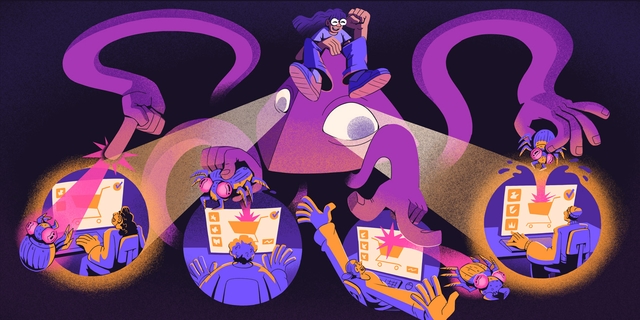
Learn how Seer identifies N+1 queries, analyzes trace data, and generates optimized SQL queries to cut query counts from 150 to 1 in minutes.
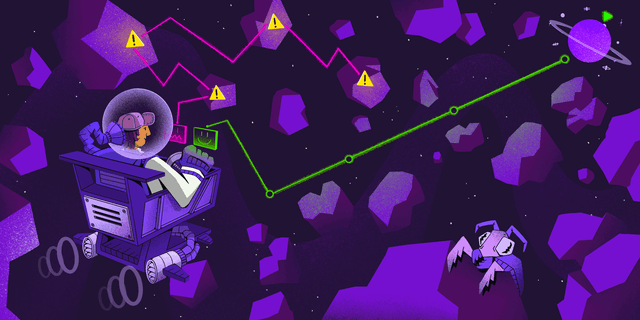
Analyze, optimize, and ship faster with webvitals.com. Get real user insights without the jargon, then use Sentry to fix the code slowing you down.
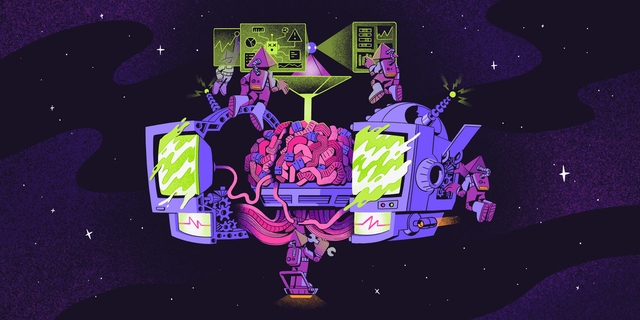
Track the most important LLM metrics: traffic, tokens, cost, latency, and errors. Learn how to set up dashboards and alerts with Sentry.